Download: Sims 3 for free Game Full Version Download

Action-Packed Open-World Driving Game Featuring Vin Diesel

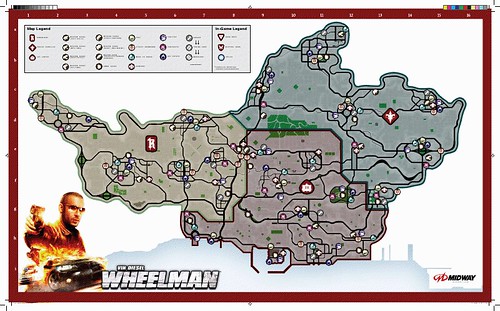 Co-produced by Vin Diesel and created in close partnership with Diesel's video game production company Tigon Studios, Wheelman is being developed by Midway Studios - Newcastle Ltd., a Midway internal studio that has assembled an international world-class team fusing proven industry veterans with a AAA track record and future emerging talent focused on creating high quality, best-in-breed gaming experiences.
"We're designing Wheelman to play like a Hollywood blockbuster," said Vin Diesel, Wheelman star and executive producer, Tigon Studios. "Playing this game will be just like taking control of the greatest car chases from feature films, except this time you're in the driver's seat."
Co-produced by Vin Diesel and created in close partnership with Diesel's video game production company Tigon Studios, Wheelman is being developed by Midway Studios - Newcastle Ltd., a Midway internal studio that has assembled an international world-class team fusing proven industry veterans with a AAA track record and future emerging talent focused on creating high quality, best-in-breed gaming experiences.
"We're designing Wheelman to play like a Hollywood blockbuster," said Vin Diesel, Wheelman star and executive producer, Tigon Studios. "Playing this game will be just like taking control of the greatest car chases from feature films, except this time you're in the driver's seat."
 "Featuring Vin Diesel and set in Barcelona, Wheelman is a title with enormous sales potential," said Martin Spiess, executive vice president, international of Midway Games Ltd. "We're making a multi-million dollar marketing investment to make sure that gamers around the world are ready when Wheelman goes on sale worldwide, which we have planned for the end of March 2009."
Midway is working closely with Vin Diesel and Tigon Studios to create an all-new property that is expected to eventually lead to a feature film, with a script that is already in development.
"This is not just another run-of-the-mill, licensed Hollywood knock-off," said Matt Booty, president and CEO, Midway. "Wheelman features evolutionary new game design mechanics like cinematic super moves and vehicular combat. Once you experience Wheelman's Vehicle Melee, you'll never want to play another driving game without it!"
Vehicle Melee allows gamers to sideswipe pursuing enemies with a simple flick of the joystick Wheelman's devastating "slam-n-ram" maneuvers can be carried out in all directions, just like you'd see in a Hollywood-style car chase.
Inspired by Hollywood's most famous action-sequences, Wheelman will deliver powerful cinematic moments throughout the game's compelling storyline.
For the most up-to-date information, screens and trailers for Wheelman, log onto www.wheelmangame.com.
About Wheelman
Action film megastar Vin Diesel and his Tigon Studios are again blurring the lines between entertainment mediums, this time collaborating with Midway in the design and production of Wheelman to ensure an edge-of- your-seat gaming experience. Diesel's voice and likeness will appear as the game's main character, expert Wheelman Milo Burik.
Combining spectacular Hollywood-style stunts with a gripping storyline, Wheelman provides an adrenaline-fueled, cinematic thrill ride guaranteed to leave you breathless. Vin Diesel stars as an undercover agent and highly skilled driver who must infiltrate the Barcelona underworld to gather intelligence surrounding a covert heist. Posing as a driver-for-hire, he ends up caught in a crossfire of corruption and chaos while trying to stay one step ahead of local law nforcement and rival
gangs.
About Tigon Studios:
Based in Los Angeles, California, TIGON STUDIOS was founded in 2002 by Vin Diesel with the goal of breaking new ground in interactive franchise entertainment by bringing strong story, high production value and interesting and intelligent characters which can exist in multiple mediums, simultaneously to the gaming and film & television industries. TIGON focuses on creating properties that can be launched in both mediums.
The only game production company founded by a major motion picture star, TIGON combines a film industry style business model with veteran talent from the gaming industry to produce the highest quality of interactive entertainment. In its unique role, TIGON works closely with both the developer and the publisher of its games to ensure clear creative vision and quality in each title. By combining the strengths of traditional film development with the innovations of the video game world, TIGON is in an exclusive position to ensure streamlined production across various platforms.
The first game produced by TIGON, Chronicles of Riddick: Escape from Butcher Bay, was a critical hit. As a producer on the project, Diesel co-designed the game and rendered voice-over and motion-capture service. The Chronicles of Riddick game was published by Vivendi-Universal Games, developed by Starbreeze and released simultaneously with the film released by Universal Studios. By following this model of cross-market development, TIGON is the future of interactive entertainment.
About Midway:
Midway Games Inc. (NYSE:MWY), headquartered in Chicago, Illinois, with offices throughout the world, is a leading developer and publisher of interactive entertainment software for major videogame systems and personal computers. More information about Midway and its products can be found at www.midway.com.
"Featuring Vin Diesel and set in Barcelona, Wheelman is a title with enormous sales potential," said Martin Spiess, executive vice president, international of Midway Games Ltd. "We're making a multi-million dollar marketing investment to make sure that gamers around the world are ready when Wheelman goes on sale worldwide, which we have planned for the end of March 2009."
Midway is working closely with Vin Diesel and Tigon Studios to create an all-new property that is expected to eventually lead to a feature film, with a script that is already in development.
"This is not just another run-of-the-mill, licensed Hollywood knock-off," said Matt Booty, president and CEO, Midway. "Wheelman features evolutionary new game design mechanics like cinematic super moves and vehicular combat. Once you experience Wheelman's Vehicle Melee, you'll never want to play another driving game without it!"
Vehicle Melee allows gamers to sideswipe pursuing enemies with a simple flick of the joystick Wheelman's devastating "slam-n-ram" maneuvers can be carried out in all directions, just like you'd see in a Hollywood-style car chase.
Inspired by Hollywood's most famous action-sequences, Wheelman will deliver powerful cinematic moments throughout the game's compelling storyline.
For the most up-to-date information, screens and trailers for Wheelman, log onto www.wheelmangame.com.
About Wheelman
Action film megastar Vin Diesel and his Tigon Studios are again blurring the lines between entertainment mediums, this time collaborating with Midway in the design and production of Wheelman to ensure an edge-of- your-seat gaming experience. Diesel's voice and likeness will appear as the game's main character, expert Wheelman Milo Burik.
Combining spectacular Hollywood-style stunts with a gripping storyline, Wheelman provides an adrenaline-fueled, cinematic thrill ride guaranteed to leave you breathless. Vin Diesel stars as an undercover agent and highly skilled driver who must infiltrate the Barcelona underworld to gather intelligence surrounding a covert heist. Posing as a driver-for-hire, he ends up caught in a crossfire of corruption and chaos while trying to stay one step ahead of local law nforcement and rival
gangs.
About Tigon Studios:
Based in Los Angeles, California, TIGON STUDIOS was founded in 2002 by Vin Diesel with the goal of breaking new ground in interactive franchise entertainment by bringing strong story, high production value and interesting and intelligent characters which can exist in multiple mediums, simultaneously to the gaming and film & television industries. TIGON focuses on creating properties that can be launched in both mediums.
The only game production company founded by a major motion picture star, TIGON combines a film industry style business model with veteran talent from the gaming industry to produce the highest quality of interactive entertainment. In its unique role, TIGON works closely with both the developer and the publisher of its games to ensure clear creative vision and quality in each title. By combining the strengths of traditional film development with the innovations of the video game world, TIGON is in an exclusive position to ensure streamlined production across various platforms.
The first game produced by TIGON, Chronicles of Riddick: Escape from Butcher Bay, was a critical hit. As a producer on the project, Diesel co-designed the game and rendered voice-over and motion-capture service. The Chronicles of Riddick game was published by Vivendi-Universal Games, developed by Starbreeze and released simultaneously with the film released by Universal Studios. By following this model of cross-market development, TIGON is the future of interactive entertainment.
About Midway:
Midway Games Inc. (NYSE:MWY), headquartered in Chicago, Illinois, with offices throughout the world, is a leading developer and publisher of interactive entertainment software for major videogame systems and personal computers. More information about Midway and its products can be found at www.midway.com.
2029 Online (Game Review)
2029" is an action MMORPG, and takes place in a sci-fi setting. The game takes place on a war-torn planet, where a small group of people have decided that it's time to restore the peace. (Players will obviously play this role.)
There are three unique classes to choose from: Humans, Dryads, and Electric Elves. Each of the three races plays differently, with humans focused primarily on ranged combat, dryads on melee, and e. elves on magic.
The game plays similarly to "Diablo," with a skillbar loaded with various attack skills, and an isometric 2.5D view. Unlike "Diablo," though, players can enter vehicles such as cars and tanks, and utilize technology far advanced to our current earth tech.
"2029 Online" features an item shop where players can buy goods using real life money, but otherwise free and paying players have access to the same content.

Need For Speed UnderCover Goes In The I-Phone's

 There are totall 19 cars available in this game{'s menu}, including vehicles from Ford, Nissan, Mazda, Porsche, BMW, Chrysler, Mercedes-Benz, Pagani, and Lamborghini. There's even a pair of Pontiacs to chose for those feeling nostalgic for the fallen brand.
Race types include simple circuit races, sprints, and cop takeouts--where the player must disable a number of surprisingly fragile police cruisers before the clock runs out--along with a few other modes spread out across over more than three dozen races. Winning a race earns you cash prizes that can be used to upgrade your ride or unlock new ones.
All of this is available in 9.99 $ but who hte heck cares as long as we are in Pakistan Or India It is free ( Extreme Piration )
There are totall 19 cars available in this game{'s menu}, including vehicles from Ford, Nissan, Mazda, Porsche, BMW, Chrysler, Mercedes-Benz, Pagani, and Lamborghini. There's even a pair of Pontiacs to chose for those feeling nostalgic for the fallen brand.
Race types include simple circuit races, sprints, and cop takeouts--where the player must disable a number of surprisingly fragile police cruisers before the clock runs out--along with a few other modes spread out across over more than three dozen races. Winning a race earns you cash prizes that can be used to upgrade your ride or unlock new ones.
All of this is available in 9.99 $ but who hte heck cares as long as we are in Pakistan Or India It is free ( Extreme Piration )Free N-Gage Game Code from Nokia

Last time I remember they gave out free licenses to FIFA 09, and after that N-Gage users in India got free game codes from Nokia. And this time, it’s UK’s turn to get free codes.
Getting your free game code is very easy. Just visit NGage Wizard and enter your details. Your free game code will be emailed to you. You can use this game code to purchase any game you like from the N-Gage Store.

First this promotion was for all worldwide users, but today they changed it to UK N-Gage users only. I wasn’t able to get one either. Bad luck, I guess.
Update: The N-Gage Wizard website is down for maintenance at the moment.
Take A Look At The New Zelda Game "Concept"

 At a developer's roundtable the other day, Nintendo's Shigeru Miyamoto showed a select group of people some concept art for a new Zelda game. That select group isn't so select anymore.
As The rumors say this game is desperately awaited by the kids of China And Japan, I don't Know about you guys but i am looking forward to check this game out my self (i am a kid to)
At a developer's roundtable the other day, Nintendo's Shigeru Miyamoto showed a select group of people some concept art for a new Zelda game. That select group isn't so select anymore.
As The rumors say this game is desperately awaited by the kids of China And Japan, I don't Know about you guys but i am looking forward to check this game out my self (i am a kid to)
Game Booster Your Alternative To Speed Up Your Game
 Ofcourse, gamers with a budget-rig always look out for alternative methods to run a game properly by tweaking the game settings and configuration, but they forget the other important technical tweaks.
Game Booster is a free tool for Windows designed to help optimize your PC for smoother, more responsive game play in the latest PC games with the touch of a button.
It defrags game directories, temporarily shuts down background processes, cleans RAM, and intensifies processor performance to meet all your gaming requirements. This is not all, I use Game Booster on my netbook to run high-definition videos.
You can also put it in use to run heavy applications like Adobe Photoshop CS4 on low-end PCs. Overall, it’s a great application and a must-have for everyone having a not-so-powerful computer.
Ofcourse, gamers with a budget-rig always look out for alternative methods to run a game properly by tweaking the game settings and configuration, but they forget the other important technical tweaks.
Game Booster is a free tool for Windows designed to help optimize your PC for smoother, more responsive game play in the latest PC games with the touch of a button.
It defrags game directories, temporarily shuts down background processes, cleans RAM, and intensifies processor performance to meet all your gaming requirements. This is not all, I use Game Booster on my netbook to run high-definition videos.
You can also put it in use to run heavy applications like Adobe Photoshop CS4 on low-end PCs. Overall, it’s a great application and a must-have for everyone having a not-so-powerful computer.
Download Game Booster
You can download Game Booster for free at: Download Game BoosterDownload Free Mobile Games at GameJump

X-Men Origins: Wolverine {A Game To Play}
Developer Raven Software isn't altogether unfamiliar with Wolverine, having played about with him in both the X-Men Legends series and Marvel Ultimate Alliance; but this is the first time the developer has flown solo with the most fearsome Canadian on the face of the planet. Just like the film, the video game adaptation of X-Men Origins: Wolverine is all about Logan, his claws, and people being punctured by said claws. Raven has stated over and over again during the development process that they are trying to capture the essence of the character - trying to deliver the ultimate Wolverine experience.

Has Raven successfully translated the raw brutality of the world's most popular savage to the video game stage, or is X-Men Origins: Wolverine as forgettable as so much of Logan's mysterious past?
Loved The Best At What He Does: Raven set out to create the ultimate Wolverine experience, and they've pretty much nailed it. This version of Logan far surpasses the movie version in terms of sheer brutality, literally tearing into enemies with everything he's got. The lunging mechanic is pure Wolverine, though one has to wonder why he can only jump extremely far when there's an enemy nearby. Feral senses are an interesting way to convey Wolverine's more bestial nature, using colors to indicate the way that Logan smells the world. If you're a fan of the scrappy, relentless, savage Wolverine, then this is your game.
It's Not All Slice And Dice: While slashing enemies to shreds with your claws can get you out of most situations, there are certainly situations where the block button is essential. More skilled players will get a kick out of the counter-attacking system, which has Wolverine retaliating in various entertaining ways if an enemy's strike is blocked with just the right timing. The quick kill system is basically a timed button press that results in some of the game's goriest deaths. And as implausible as it might sound, deflecting an incoming missile back at the shooter with your claws is extremely satisfying. All in all the combat system is deep and entertaining enough to keep you smiling throughout the entire length of the 8-10 hour game.
Build Your Own Logan: There are multiple ways to customize how your version of Wolverine plays. As you level, you gain skill points that can be used to beef up the powers and skills you accrue as you play. You also unlock up to three mutagen slots, which you can assign any number of powers to, from converting damaged caused to health to increasing the experience gained with each kill. It gives the player a little bit of control over how the game plays. It might not be much, but I appreciate having the options available.
Double-Sized Boss Fights: While some of the boss fights are nothing more than glorified brawls, there are a couple scattered throughout the game that are simply amazing. I don't want to spoil anything here, but one boss fight in particular had the X-Men fan in me wanting to stand up and applaud. The big Gambit fight is another one that had me grinning ear-to-ear. I couldn't have imagined a better place for these two characters to battle it out.
The Inevitable Fan Service: The developers at Raven further prove their comic book pedigree by including little nods to characters and events taking place in the past and distant future of the Marvel Universe. Audio logs scattered about various levels give us insight into the motivations of the characters working behind the scenes, while cameos from other Marvel characters give us some interesting information as to the origins of others. Between the little nods and the unlockable costumes from Wolverines come and gone, there's plenty in the game to please the hardcore fans.
Achievement Tracking: A small feature more than likely thrown in as an afterthought, the screen that keeps track of your kill counts for specific achievements is an excellent addition to the game. Developers need to pay attention here. If I have to kill 2,000 enemies to gain an achievement or trophy, being able to see how many I've got left to kill is not only convenient, it's an excellent motivation to go back and replay through the game after you've completed it.
Raven Software has done a lot of things right with X-Men Origins: Wolverine. They've captured the look and feel of Marvel's claw-wielding sociopath better than any other game before it. They even attempted to do something new, introducing real-time healing that more often than not saw my version of Wolverine running around with strips of cloth pasted randomly about his chest and blood pooling around his ass in a rather disgusting fashion, but they certainly did try to do something different. I've the distinct feeling that if they hadn't been tied down to the movie's release date, this could have been one of the best comic book video games of all time.
Flaws aside, X-Men Origins: Wolverine still manages to be the best it is at what it does, delivering many hours of satisfyingly brutal action the merry Marvel way.
X-Men Origins: Wolverine was developed by Raven Software and published by Activision, released May 1st for the PlayStation 3, Xbox 360, Nintendo Wii, Nintendo DS, PSP, and PC. Retails for $30 - $60. Played Xbox 360 version. Completed game on standard difficulty, unlocked three extra costumes, earned 40 out of 50 achievements.
Mario Bros The History Of A LEGEND !


 1996: Super Mario 64 (N64)
Mario frolics through various 3-D worlds to save the kidnapped Princess Peach Toadstool.
2002: Super Mario Sunshine (GCN)
Mario and Yoshi reunite to clean up Isle Delfino and rescue Peach once again.
2007: Mario & Sonic at the Olympic Games (Wii/NDS)
Opposing mascots Mario and Sonic the Hedgehog finally go head-to-head... at the Beijing Olympics.
2007: Super Mario Galaxy (Wii)
This time, Bowser takes Peach away into outer space, forcing Mario to explore planets big and small. Galaxy's innovative gravity system was one factor behind its critical acclaim.
The names
Virtually all Mario fans know how Mario got his name (see The birth), but what about some of the other characters? Fortunately, Mario creator Shigeru Miyamoto has revealed more name origins during a few interviews.
Donkey Kong
Simply put, "Donkey Kong" means "stupid monkey," so forget the silly rumors. Miyamoto got "donkey" from looking up manuke (Japanese for "stupid") in an English dictionary, while "Kong" comes from King Kong, obviously.
Luigi
The American team provided the name "Luigi" as something to go along with "Mario." Afterwards, the Japanese team noticed a happy coincidence: Ruigi means "analogous."
Koopas
The "Koopa" clan comes from "Kuppa," Bowser's Japanese name. Miyamoto revealed that they were considering naming Bowser either Kuppa, Yukke (Yukka), or Bibinba (Bi Bim Bap), all Korean dishes.
Wario
Wario's name is a combination of Mario and warui, which means "bad" in Japanese.
After just three years, Nintendo's aggressive move into the North American videogame market proved a complete disaster. Out of three thousand units built, its much-hyped, last-ditch arcade shooter Radar Scope only sold one thousand units. The rest gathered dust in a warehouse.
Minoru Arakawa, the man who placed the bold Hail Mary order, begged his father-in-law (Nintendo CEO Hiroshi Yamauchi) to reprogram the useless Radar Scope machines into a new hit game. Anything less would be the nail in Nintendo of America's coffin. Yamauchi agreed, handing the job to Gunpei Yokoi, creator of the successful Game & Watch series, and his young protege, Shigeru Miyamoto... a graphic artist who'd never designed a game in his life.
For the first time, story came first and gameplay was designed around it. Miyamoto based his plot on the Popeye love triangle, a license Nintendo pursued and lost. Very quickly, a giant gorilla subbed for Bluto while Popeye the Sailor-Man became Jumpman, a carpenter leaping barrels and scaling his construction site to rescue "Lady." Miyamoto wanted a linear progression through different stages. His four-man programming team didn't want to code the same game four times. It was foolish, like redesigning a chess board every five moves.
Under protest, they delivered a whopping 20k of code while Miyamoto composed the music and designed animated "intermissions" to advance the story. Everything had to stay within Radar Scope's hardware limitations.
Chips and conversion kits were shipped to America in 1981. Arakawa, his wife and a few others changed two thousand Radar Scopes into Donkey Kongs, but Arakawa knew "Jumpman" wouldn't cut it with the Americans. The character needed a real name. His breakthrough came when their landlord burst into a board meeting, demanding long-overdue rent.
The man's name was Segali... Mario Segali.
Might As Well Jump
Twenty-six years later, Mario is the face of videogaming, more recognized around the world than Mickey Mouse. He's appeared in two hundred games, collectively selling over two hundred million units. He's launched consoles, salvaged entire industries and led the charge into true 3D gaming. Six out of the top-ten best selling videogames of all time are Mario games. Orchestras perform his theme music. Operas have been written. He's gotten his own cartoon series and, unfortunately for those that saw it, a live-action film. He propelled his creator from staff artist to legend, honored in America, knighted in France and in control of his own division at the third largest company in Japan.
Well before Mario became the official mascot of Nintendo, Donkey Kong's runaway success - 60,000 cabinets eventually shipped - was attributed to its star: Donkey Kong. Mario barely registered. For his next appearance in 1983's Donkey Kong Jr., he took on the whip-wielding villain role.
Miyamoto intended Mario to be his go-to character, a slightly pudgy, silly-looking fellow who could easily fit into any game as needed. Accordingly, he designed his little carpenter mostly by creating elegant solutions to practical, 8-bit problems. Overalls made the arms more visible. A thick mustache showed up better than a mouth and accented the bulbous nose. Bright colors popped against dark backgrounds. He wore a hat so Miyamoto could skip designing a hairstyle - not his favorite task -- and to save programmers from animating it during jumps.
...Except Mario's occupation didn't sit right. A colleague told Miyamoto that his little sprite looked more like a plumber.
Accordingly, Miyamoto put Mario in a crab/ turtle/ firefly-infested sewer for his third outing. Further inspiration came from Joust, an early co-op game where players worked together or, alternatively, wiped each other out. For Player two, Miyamoto adapted his catch-all character again, swapping Mario's color palette to create an identical "brother."
Stories range on how Luigi got his name, from a play on the Japanese word for "analogous" to a pizza parlor near Arakawa's office called Mario & Luigi's. Regardless, the twins went to work clearing underground pipes of vermin in Mario Bros., their first headlining game. Players leapt across platforms, stunned critters by punching the ground underneath them, and booted them off-screen to reap their reward in gold coins.
Mario Bros. was only modestly successful. Arcade titles typically had a quick shelf life anyway, and Yamauchi wanted to move Nintendo into the more lucrative home gaming market... just as it completely imploded in the U.S.
Japan remained unaffected. By 1985, the Nintendo Famicom overcame its rocky, recall-stained launch to dominate Asia. However, after several false starts -- including a scrubbed deal with Atari -- North America remained elusive. Through it all, Yamauchi held to a simple philosophy: games sold consoles, and the best game designer in the world worked for him. He gave Miyamoto his own division, R&D4, to create Famicom games in time for Nintendo's next pass at the American market.
Mario and Luigi left both sewers and arcades behind. The Mushroom Kingdom was their home now, and the Famicom their new platform.
A Series of Tubes
Early videogames were largely designed by the programmers coding them. Shigeru Miyamoto, on the other hand, was an artist by training. His approach was an artistic one. The games he designed were so different from everything else simply because he didn't really know what he wasn't supposed to do. That left him free to explore, and exploration soon became a part of his games.
In Donkey Kong and Mario Bros., he created the first true platformers, and now he wanted to expand those concepts. Early on, Miyamoto played with the idea of making Mario and Luigi bigger and smaller as they gained and lost power-ups. Progression would be linear, but a little exploration and experimentation would reveal hidden items, rooms, and shortcuts. If you saw a blocked-off chamber, it was always somehow accessible once the right blocks were smashed.
Careful attention went into creating the Mushroom Kingdom's challenges. Miyamoto wanted the player's experience to be consistently good and constantly evolving... always interesting, never overwhelming. Enemies balanced threat with whimsy. "Mushroom traitor" Goombas and pokey turtle Koopa Troopas got their comeuppance when Mario (Luigi for Player two) stomped on them or punted empty Koopa shells in their direction. Power-ups turned him into giant-sized Super Mario, fireball-throwing Fire Mario, or made him temporarily invincible. Finding and collecting coins earned you extra lives and a ticking clock kept you moving. Pipes and warp zones let you skip ahead or skip entire levels. Miyamoto packed bright, colorful levels full of secrets to find, every inch stamped with his genius and set to Koji Kondo's immediately catchy tunes. Even the springy buzz of Mario's jumps pleased the ear.
Miyamoto spent so much time perfecting Mario, he was forced to put R&D4's other major project - The Legend of Zelda - on hold, and cede much of Wrecking Crew, a Famicom game staring the brothers Mario, to others.
In October 1985, the Famicom, by then redubbed the Nintendo Entertainment System, went to America in several forms -- one of which included a R.O.B. the Robot-less Super Mario Bros. bundled in the box. Arakawa found exactly one unenthusiastic distributor willing to gamble a limited stock in their New York stores as a test run. Expectations weren't high. That fad was over. Everyone expected the NES to sit on the shelves and stay there right through the upcoming holiday season.
Only it didn't. Word got out about a system that blew Atari away, and the amazing game that came with it.
The plot wasn't deep, but it became the basis for virtually every Mario game to follow. A highly unpleasant turtle-dragon named Bowser (a.k.a. King Koopa, a play on the turtle-demon kappas of Japanese folklore) kidnapped Princess Peach (a.k.a. Princess Toadstool) and conquered the Mushroom Kingdom. Tiny Mario leapt chasms, stomped foes, and traversed eight huge worlds rushing to her rescue. You couldn't help but feel the little guy had a lot of heart.
All paths led to a fight with Bowser over a lava pit and eventually to Peach and a chaste reward... i.e. a nice "Thank You, Mario!" Anyway, heroes expected rewards. Mario was just a working stiff, doing what needed doing.
Super Mario Bros. was a sheer joy to play, and soon bore out Yamauchi's philosophy. By February, tens of millions of Nintendo systems sold across the U.S., nearly every one representing a gamer playing Mario. Bundled or otherwise, a record forty million Super Mario games sold, ten million more than the nearest competitor even two decades later.
The videogame crash of 1983 was officially done, all thanks to a plucky little Italian plumber. A sequel was obvious, but that's when things got tricky in every conceivable way.
This Info Was Bought to You By IGN,But represented By Gobblerr In A Better Way!
1996: Super Mario 64 (N64)
Mario frolics through various 3-D worlds to save the kidnapped Princess Peach Toadstool.
2002: Super Mario Sunshine (GCN)
Mario and Yoshi reunite to clean up Isle Delfino and rescue Peach once again.
2007: Mario & Sonic at the Olympic Games (Wii/NDS)
Opposing mascots Mario and Sonic the Hedgehog finally go head-to-head... at the Beijing Olympics.
2007: Super Mario Galaxy (Wii)
This time, Bowser takes Peach away into outer space, forcing Mario to explore planets big and small. Galaxy's innovative gravity system was one factor behind its critical acclaim.
The names
Virtually all Mario fans know how Mario got his name (see The birth), but what about some of the other characters? Fortunately, Mario creator Shigeru Miyamoto has revealed more name origins during a few interviews.
Donkey Kong
Simply put, "Donkey Kong" means "stupid monkey," so forget the silly rumors. Miyamoto got "donkey" from looking up manuke (Japanese for "stupid") in an English dictionary, while "Kong" comes from King Kong, obviously.
Luigi
The American team provided the name "Luigi" as something to go along with "Mario." Afterwards, the Japanese team noticed a happy coincidence: Ruigi means "analogous."
Koopas
The "Koopa" clan comes from "Kuppa," Bowser's Japanese name. Miyamoto revealed that they were considering naming Bowser either Kuppa, Yukke (Yukka), or Bibinba (Bi Bim Bap), all Korean dishes.
Wario
Wario's name is a combination of Mario and warui, which means "bad" in Japanese.
After just three years, Nintendo's aggressive move into the North American videogame market proved a complete disaster. Out of three thousand units built, its much-hyped, last-ditch arcade shooter Radar Scope only sold one thousand units. The rest gathered dust in a warehouse.
Minoru Arakawa, the man who placed the bold Hail Mary order, begged his father-in-law (Nintendo CEO Hiroshi Yamauchi) to reprogram the useless Radar Scope machines into a new hit game. Anything less would be the nail in Nintendo of America's coffin. Yamauchi agreed, handing the job to Gunpei Yokoi, creator of the successful Game & Watch series, and his young protege, Shigeru Miyamoto... a graphic artist who'd never designed a game in his life.
For the first time, story came first and gameplay was designed around it. Miyamoto based his plot on the Popeye love triangle, a license Nintendo pursued and lost. Very quickly, a giant gorilla subbed for Bluto while Popeye the Sailor-Man became Jumpman, a carpenter leaping barrels and scaling his construction site to rescue "Lady." Miyamoto wanted a linear progression through different stages. His four-man programming team didn't want to code the same game four times. It was foolish, like redesigning a chess board every five moves.
Under protest, they delivered a whopping 20k of code while Miyamoto composed the music and designed animated "intermissions" to advance the story. Everything had to stay within Radar Scope's hardware limitations.
Chips and conversion kits were shipped to America in 1981. Arakawa, his wife and a few others changed two thousand Radar Scopes into Donkey Kongs, but Arakawa knew "Jumpman" wouldn't cut it with the Americans. The character needed a real name. His breakthrough came when their landlord burst into a board meeting, demanding long-overdue rent.
The man's name was Segali... Mario Segali.
Might As Well Jump
Twenty-six years later, Mario is the face of videogaming, more recognized around the world than Mickey Mouse. He's appeared in two hundred games, collectively selling over two hundred million units. He's launched consoles, salvaged entire industries and led the charge into true 3D gaming. Six out of the top-ten best selling videogames of all time are Mario games. Orchestras perform his theme music. Operas have been written. He's gotten his own cartoon series and, unfortunately for those that saw it, a live-action film. He propelled his creator from staff artist to legend, honored in America, knighted in France and in control of his own division at the third largest company in Japan.
Well before Mario became the official mascot of Nintendo, Donkey Kong's runaway success - 60,000 cabinets eventually shipped - was attributed to its star: Donkey Kong. Mario barely registered. For his next appearance in 1983's Donkey Kong Jr., he took on the whip-wielding villain role.
Miyamoto intended Mario to be his go-to character, a slightly pudgy, silly-looking fellow who could easily fit into any game as needed. Accordingly, he designed his little carpenter mostly by creating elegant solutions to practical, 8-bit problems. Overalls made the arms more visible. A thick mustache showed up better than a mouth and accented the bulbous nose. Bright colors popped against dark backgrounds. He wore a hat so Miyamoto could skip designing a hairstyle - not his favorite task -- and to save programmers from animating it during jumps.
...Except Mario's occupation didn't sit right. A colleague told Miyamoto that his little sprite looked more like a plumber.
Accordingly, Miyamoto put Mario in a crab/ turtle/ firefly-infested sewer for his third outing. Further inspiration came from Joust, an early co-op game where players worked together or, alternatively, wiped each other out. For Player two, Miyamoto adapted his catch-all character again, swapping Mario's color palette to create an identical "brother."
Stories range on how Luigi got his name, from a play on the Japanese word for "analogous" to a pizza parlor near Arakawa's office called Mario & Luigi's. Regardless, the twins went to work clearing underground pipes of vermin in Mario Bros., their first headlining game. Players leapt across platforms, stunned critters by punching the ground underneath them, and booted them off-screen to reap their reward in gold coins.
Mario Bros. was only modestly successful. Arcade titles typically had a quick shelf life anyway, and Yamauchi wanted to move Nintendo into the more lucrative home gaming market... just as it completely imploded in the U.S.
Japan remained unaffected. By 1985, the Nintendo Famicom overcame its rocky, recall-stained launch to dominate Asia. However, after several false starts -- including a scrubbed deal with Atari -- North America remained elusive. Through it all, Yamauchi held to a simple philosophy: games sold consoles, and the best game designer in the world worked for him. He gave Miyamoto his own division, R&D4, to create Famicom games in time for Nintendo's next pass at the American market.
Mario and Luigi left both sewers and arcades behind. The Mushroom Kingdom was their home now, and the Famicom their new platform.
A Series of Tubes
Early videogames were largely designed by the programmers coding them. Shigeru Miyamoto, on the other hand, was an artist by training. His approach was an artistic one. The games he designed were so different from everything else simply because he didn't really know what he wasn't supposed to do. That left him free to explore, and exploration soon became a part of his games.
In Donkey Kong and Mario Bros., he created the first true platformers, and now he wanted to expand those concepts. Early on, Miyamoto played with the idea of making Mario and Luigi bigger and smaller as they gained and lost power-ups. Progression would be linear, but a little exploration and experimentation would reveal hidden items, rooms, and shortcuts. If you saw a blocked-off chamber, it was always somehow accessible once the right blocks were smashed.
Careful attention went into creating the Mushroom Kingdom's challenges. Miyamoto wanted the player's experience to be consistently good and constantly evolving... always interesting, never overwhelming. Enemies balanced threat with whimsy. "Mushroom traitor" Goombas and pokey turtle Koopa Troopas got their comeuppance when Mario (Luigi for Player two) stomped on them or punted empty Koopa shells in their direction. Power-ups turned him into giant-sized Super Mario, fireball-throwing Fire Mario, or made him temporarily invincible. Finding and collecting coins earned you extra lives and a ticking clock kept you moving. Pipes and warp zones let you skip ahead or skip entire levels. Miyamoto packed bright, colorful levels full of secrets to find, every inch stamped with his genius and set to Koji Kondo's immediately catchy tunes. Even the springy buzz of Mario's jumps pleased the ear.
Miyamoto spent so much time perfecting Mario, he was forced to put R&D4's other major project - The Legend of Zelda - on hold, and cede much of Wrecking Crew, a Famicom game staring the brothers Mario, to others.
In October 1985, the Famicom, by then redubbed the Nintendo Entertainment System, went to America in several forms -- one of which included a R.O.B. the Robot-less Super Mario Bros. bundled in the box. Arakawa found exactly one unenthusiastic distributor willing to gamble a limited stock in their New York stores as a test run. Expectations weren't high. That fad was over. Everyone expected the NES to sit on the shelves and stay there right through the upcoming holiday season.
Only it didn't. Word got out about a system that blew Atari away, and the amazing game that came with it.
The plot wasn't deep, but it became the basis for virtually every Mario game to follow. A highly unpleasant turtle-dragon named Bowser (a.k.a. King Koopa, a play on the turtle-demon kappas of Japanese folklore) kidnapped Princess Peach (a.k.a. Princess Toadstool) and conquered the Mushroom Kingdom. Tiny Mario leapt chasms, stomped foes, and traversed eight huge worlds rushing to her rescue. You couldn't help but feel the little guy had a lot of heart.
All paths led to a fight with Bowser over a lava pit and eventually to Peach and a chaste reward... i.e. a nice "Thank You, Mario!" Anyway, heroes expected rewards. Mario was just a working stiff, doing what needed doing.
Super Mario Bros. was a sheer joy to play, and soon bore out Yamauchi's philosophy. By February, tens of millions of Nintendo systems sold across the U.S., nearly every one representing a gamer playing Mario. Bundled or otherwise, a record forty million Super Mario games sold, ten million more than the nearest competitor even two decades later.
The videogame crash of 1983 was officially done, all thanks to a plucky little Italian plumber. A sequel was obvious, but that's when things got tricky in every conceivable way.
This Info Was Bought to You By IGN,But represented By Gobblerr In A Better Way!
Next big PS3 price are cut and set for April?

Games + Social Network = ?

 Well, the game is known as Mousehunt. Guess what, it has taken our school by storm and everyone’s playing it. It has been surprisingly popular- only needing to click a button once every fifteen minutes.
However, will it draw actual gamers in? I doubt so. My first online game was Neopets, and that was few years back when I was 8 years old. Since then, I tried the online gaming known as Xbox live, and I will never go back to “refresh games”. Now, how will this apply to gamers?
Most gamers will not be enchanted by this. Many will like the RPG system, but not actually play it, because there are already many other alternatives.
Well, the game is known as Mousehunt. Guess what, it has taken our school by storm and everyone’s playing it. It has been surprisingly popular- only needing to click a button once every fifteen minutes.
However, will it draw actual gamers in? I doubt so. My first online game was Neopets, and that was few years back when I was 8 years old. Since then, I tried the online gaming known as Xbox live, and I will never go back to “refresh games”. Now, how will this apply to gamers?
Most gamers will not be enchanted by this. Many will like the RPG system, but not actually play it, because there are already many other alternatives.
 Moving on, there are games on facebook which is meant for gamers. For example, Guitar Geek. It is in simple terms, a Guitar Hero/ Rock Band clone. However, its VERY lacking. Instead of licensed songs from famous bands such as Green Day and Nine Inch Nails, it gives you songs which seem to be inspired by people screaming in hell. Really, its target audience would already have games a hundred times better.
No matter how fun a rhythm game is, you need to have good syncing. That doesn’t come. You see, when you play on consoles, you need to click the strum bar whenever you hit a note. However, you don’t need to click anything expect those few buttons. It instantly loses it’s “feel”. When you click or hit a note in a “professional” game, you get that satisfaction that you are winning, something you don’t get in this game. Besides, whether are the plastic instruments? It has been a few years since Facebook and Myspace boomed, and most gamers are using them. Now, people are using that spark.
Moving on, there are games on facebook which is meant for gamers. For example, Guitar Geek. It is in simple terms, a Guitar Hero/ Rock Band clone. However, its VERY lacking. Instead of licensed songs from famous bands such as Green Day and Nine Inch Nails, it gives you songs which seem to be inspired by people screaming in hell. Really, its target audience would already have games a hundred times better.
No matter how fun a rhythm game is, you need to have good syncing. That doesn’t come. You see, when you play on consoles, you need to click the strum bar whenever you hit a note. However, you don’t need to click anything expect those few buttons. It instantly loses it’s “feel”. When you click or hit a note in a “professional” game, you get that satisfaction that you are winning, something you don’t get in this game. Besides, whether are the plastic instruments? It has been a few years since Facebook and Myspace boomed, and most gamers are using them. Now, people are using that spark.AMD introduces Dragon PC gaming platform and new Phenom II CPU
 Phenom II X4 940 isn't designed to overtake Intel's Core i7 965-Extreme Edition as the fastest desktop chip around, but it also doesn't have a $1,000 price tag. At $275 (at price per chip by the thousand, anyway), the 3.0GHz Phenom II X4 940 instead competes with Intel's midrange CPUs. Leaked benchmarks (big grain of salt here, folks), show the X4 940 holding up well against Intel's 2.93GHz Core i7 940 part, which currently retails for over $550. You can expect various other scores and full reviews will hit the Web today. We'll have our own once we get a break from CES, so be sure to check around for the full picture.
Below you'll find the overall speeds and feeds for Phenom II X4:
* L1 Cache: 64K instruction, 64K data cache per core (512KB total per processor)
* L2 Cache: 512KB data cache per core (2MB total L2 per processor)
* L3 Cache: 6MB (shared)
* Memory Controller Type: Integrated 128-bit wide memory controller
* Types of Memory Supported: Up to DDR2-1066MHz
* Packaging: Socket AM2+ 940-pin
* Approximate Transistor count: ~758 million (45nm)
* Approximate Die Size: 258 mm2 (45nm)
Of those, the 6MB of L3 cache represents one of the biggest gains over the original Phenom design, which had just 2MB shared among the various cores. And if you find the DDR2 memory and AM2+ memory support alarming given Intel's support for faster DDR3 on its Core i7 X58 motherboards, AMD informs us that DD3 compatibility will come shortly into 2009 when it introduces its AM3 chipsets, although that will also require a new batch of AM3-compatible Phenom II's That might give you pause about adopting Phenom II before AM3 hits, knowing that the updated chipset is apparently just around the corner. Of particular interest to overclockers for the moment, though, the Phenom II X4 940 is also one of AMD's "Black Edition" chips, which ships with an unlocked clock multiplier.
For the Dragon platform as a whole, AMD has a few interesting programs that you can only use with a complete Phenom/Radeon/790 chipset PC. AMD Fusion is an application that lets you set your PC to gaming state with the click of a button, shutting down all all ancillary programs and processes. And AMD's OverDrive lets you set application specific overclocked settings on the fly. It's great to overclock your PC for gaming, but you for power consumption and overall issues of wear-and-tear, you don't necessarily need that extra speed for Web browsing.
We didn't see broad adoption of AMD's Spider platform from system builders, but we know of several desktop vendors who will be selling Dragon systems in the near future. If Phenom II's price-performance offering holds up, we expect we'll see enthusiastic support for Dragon from the DIY community as well.
Phenom II X4 940 isn't designed to overtake Intel's Core i7 965-Extreme Edition as the fastest desktop chip around, but it also doesn't have a $1,000 price tag. At $275 (at price per chip by the thousand, anyway), the 3.0GHz Phenom II X4 940 instead competes with Intel's midrange CPUs. Leaked benchmarks (big grain of salt here, folks), show the X4 940 holding up well against Intel's 2.93GHz Core i7 940 part, which currently retails for over $550. You can expect various other scores and full reviews will hit the Web today. We'll have our own once we get a break from CES, so be sure to check around for the full picture.
Below you'll find the overall speeds and feeds for Phenom II X4:
* L1 Cache: 64K instruction, 64K data cache per core (512KB total per processor)
* L2 Cache: 512KB data cache per core (2MB total L2 per processor)
* L3 Cache: 6MB (shared)
* Memory Controller Type: Integrated 128-bit wide memory controller
* Types of Memory Supported: Up to DDR2-1066MHz
* Packaging: Socket AM2+ 940-pin
* Approximate Transistor count: ~758 million (45nm)
* Approximate Die Size: 258 mm2 (45nm)
Of those, the 6MB of L3 cache represents one of the biggest gains over the original Phenom design, which had just 2MB shared among the various cores. And if you find the DDR2 memory and AM2+ memory support alarming given Intel's support for faster DDR3 on its Core i7 X58 motherboards, AMD informs us that DD3 compatibility will come shortly into 2009 when it introduces its AM3 chipsets, although that will also require a new batch of AM3-compatible Phenom II's That might give you pause about adopting Phenom II before AM3 hits, knowing that the updated chipset is apparently just around the corner. Of particular interest to overclockers for the moment, though, the Phenom II X4 940 is also one of AMD's "Black Edition" chips, which ships with an unlocked clock multiplier.
For the Dragon platform as a whole, AMD has a few interesting programs that you can only use with a complete Phenom/Radeon/790 chipset PC. AMD Fusion is an application that lets you set your PC to gaming state with the click of a button, shutting down all all ancillary programs and processes. And AMD's OverDrive lets you set application specific overclocked settings on the fly. It's great to overclock your PC for gaming, but you for power consumption and overall issues of wear-and-tear, you don't necessarily need that extra speed for Web browsing.
We didn't see broad adoption of AMD's Spider platform from system builders, but we know of several desktop vendors who will be selling Dragon systems in the near future. If Phenom II's price-performance offering holds up, we expect we'll see enthusiastic support for Dragon from the DIY community as well.